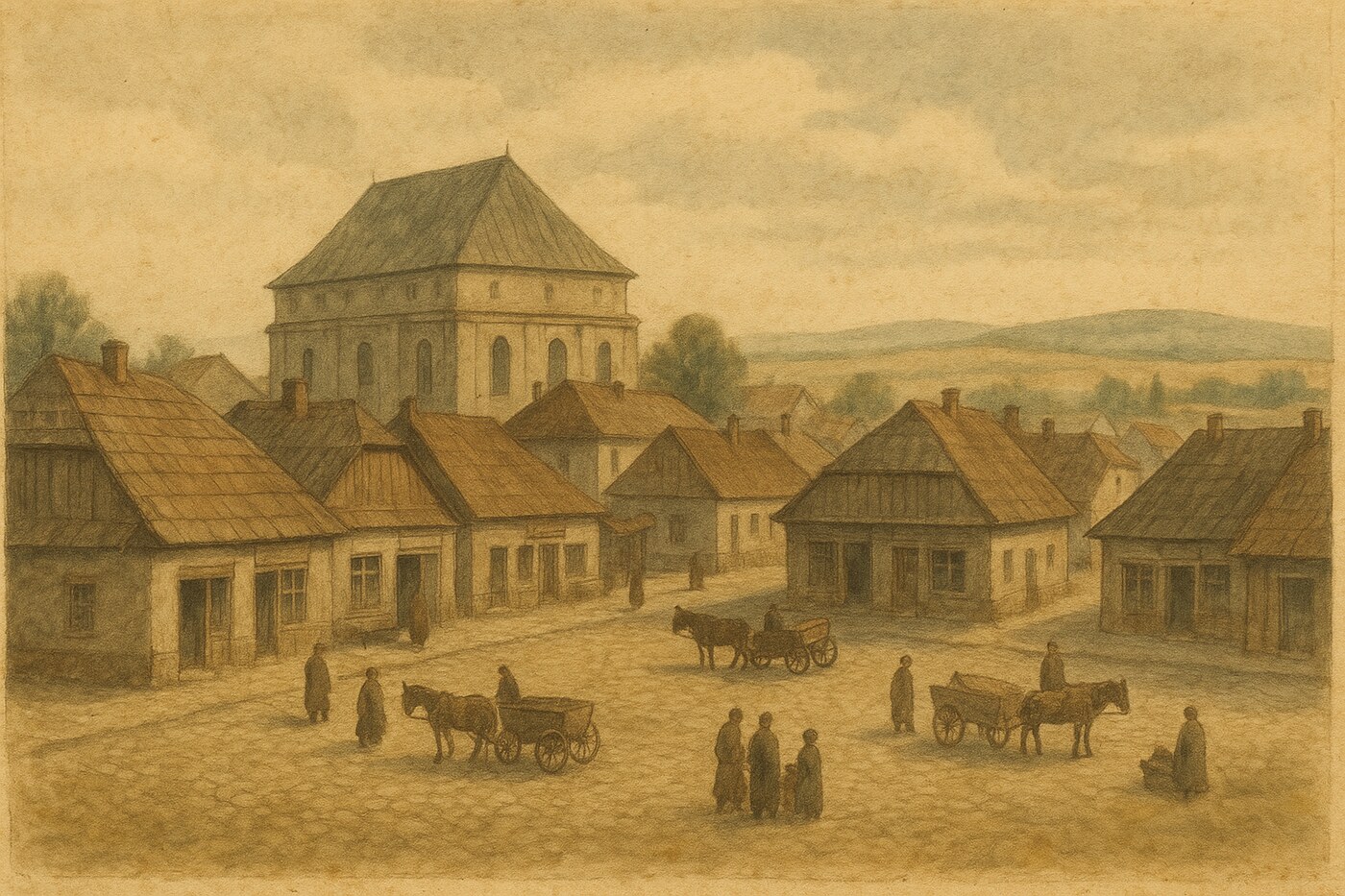
Chmielnik
Jewish life, families, trades, institutions, destruction, survival, and remembrance in the market town of Chmielnik in the Kielce region.
- Evidence nodes
- 10,783
- Node types
- 14
- Book scans
- 664
- Region
- Kielce Region
Everything here is read from the real pages
You are browsing Pinkes Khmielnik — the Chmielnik Yizkor memorial book, written by survivors in Hebrew and Yiddish. Every person, family, place, and event on this site was read from its actual scanned pages, and each fact links back to the exact passage and scan it came from. Nothing is invented; the original page is always one click away — a modern way to browse a primary source, not a replacement for it.
About Chmielnik
Articles on the events, people, places and institutions that shaped the community — drawn from its memorial book and the wider historical record — and guided paths through the book itself.
- Guided path · 4 chapters
What kind of Jewish community was Chmielnik?
This path reconstructs Chmielnik as a lived community: a place of worship, commerce, skilled work, family life, and local institutions. By the end, readers will see more than a victim population—they will see the social world that Nazi persecution sought to destroy.
Follow the path - Guided path · 4 chapters
How did Jewish people debate their future?
This path follows Zionist, socialist, religious, and youth movements in Chmielnik. It shows how political disagreement and collective organizing were part of ordinary Jewish public life, not merely responses to persecution.
Follow the path - Guided path · 4 chapters
How did German rule dismantle daily life?
This path traces the transition from invasion to persecution: attacks on religious spaces, seizure of Jewish men, forced labor, the ghetto, and coercive Jewish administration. It explains how destruction unfolded through escalating measures rather than in one single event.
Follow the path - Guided path · 4 chapters
How was the community destroyed?
This path follows the deportations, mass transports, killings, and destruction of Chmielnik’s Jewish population. It also preserves individual experiences that make the scale of the catastrophe humanly comprehensible.
Follow the path - Guided path · 4 chapters
How did people resist, hide, and survive?
This path centers on choices made under extreme danger: escape from transports, hiding with Christian families, evading armed groups, and joining military resistance. It presents survival as a chain of risks, relationships, and acts of courage rather than as a simple outcome.
Follow the path - Guided path · 4 chapters
How did Chmielnik survive in memory?
This path follows the community after liberation: return, testimony, landsmen aid, family lists, organizations, and monuments. It shows how survivors transformed loss into documentation and communal responsibility.
Follow the path - Chronology · 10 moments
Chmielnik through time
Every dated event and testimony in the book, in order, each connected to its source.
Open the chronology
People, families, places, and events
Enter the historical record through a familiar subject. Each result remains connected to the passage that supports it.
You know things this book doesn't
A memorial book holds what its compilers could gather, decades ago and often from memory. Families carry the rest — a photograph, a maiden name, a street, a correction to a date. Editors of Chmielnik can add that context to any node, with their contribution recorded and reviewable.
Reading needs no account. Editing is invite-only, so the record stays accountable.
No one is keeping Chmielnik yet. If this is your family's town, you could be the first — the book is already open, it just needs someone who knows what it left out.