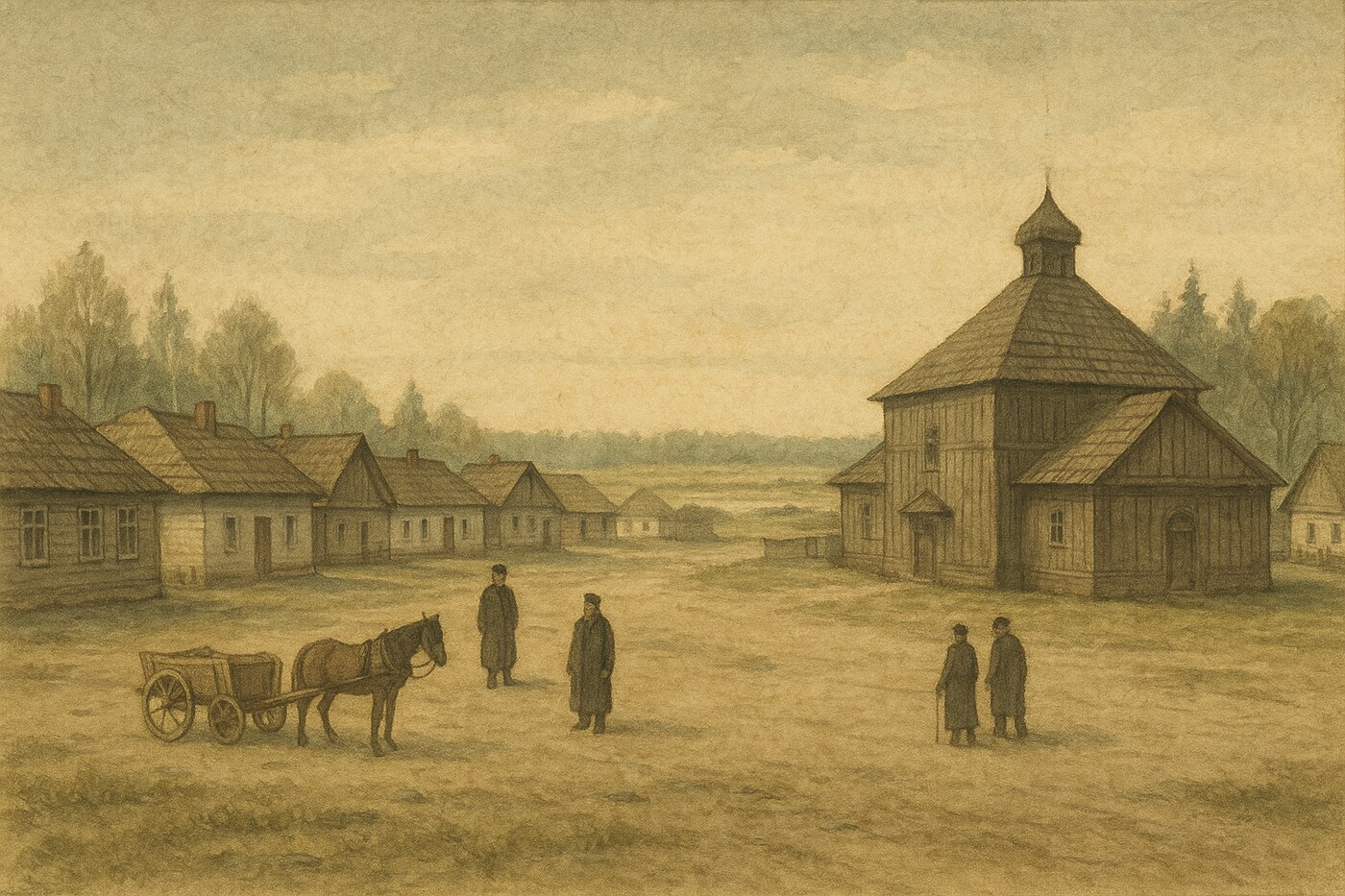
Drohiczyn
Jewish life, families, institutions, destruction, survival, and remembrance in the community of Drohiczyn.
Keeping this memory alive
These supporters help keep the Drohiczyn memorial book read, researched and open to everyone, so the community it remembers is not forgotten.
 Alon Carmel
Everything here is read from the real pages
You are browsing Drohitshin: finf hundert yor Yidish-lebn — the Drohiczyn Yizkor memorial book, written by survivors in Hebrew and Yiddish. Every person, family, place, and event on this site was read from its actual scanned pages, and each fact links back to the exact passage and scan it came from. Nothing is invented; the original page is always one click away — a modern way to browse a primary source, not a replacement for it.
- Evidence nodes
- 5,661
- Node types
- 15
- Book scans
- 431
- Region
- Polesia (Brest Region)
About Drohiczyn
Articles on the events, people, places and institutions that shaped the community — drawn from its memorial book and the wider historical record — and guided paths through the book itself.
- Theme · 1500–1942
Drohiczyn’s Jewish community: life, work, and memory
The memorial book’s central subject is the community itself, whose religious life, livelihoods, institutions, and fate are told across many accounts.
Read - Theme · 1941–1943
The destruction of Drohiczyn’s Jews and the struggle to survive
The book repeatedly records the murder, displacement, resistance, and survival of the town’s Jews, making this essential to understanding its rupture.
Read - Institution · 1883–1942
Schools, Study Houses, and Libraries in Jewish Drohiczyn
The records show education as a sustained communal priority, spanning traditional study, modern schools, libraries, and teachers’ work.
Read - Theme · 1942
A town of many currents: Hasidim, Mitnagdim, and religious leadership in Drohitchin
The memorial book emphasizes both a largely Mitnagdim community and a Hasidic minority, alongside rabbis and disputes that shaped communal religious life.
Read - Theme · 1926–1941
Zionist youth and the road to Palestine in Drohiczyn
The records point to a lively range of Zionist organizations and youth movements, revealing how political ideals shaped young people’s choices and community activity.
Read - Institution
Mutual Aid in Drohiczyn: Care for the Sick, the Poor, and Travelers
Charitable institutions in the records offer a clear view of how residents organized practical support for vulnerable neighbors and visitors.
Read - Theme · 1911–1942
Trade, Credit, and the Changing Fortunes of Jewish Drohitchin
The records describe livelihoods from commerce and craft to farming, alongside a cooperative bank and the importance of transport and regional connections.
Read - Organization · 1914–1942
Landsmen abroad: keeping Drohiczyn connected through aid
The records show emigrants building organizations and sending substantial assistance back to their hometown, extending community ties across the Atlantic.
Read - Guided path · 4 chapters
What made Jewish Drohiczyn a community?
This path introduces the institutions, livelihoods, families, and everyday relationships that shaped Jewish life in Drohiczyn. By the end, readers will see the community as a living society rather than only as a place later destroyed.
Follow the path - Guided path · 4 chapters
How did Drohiczyn’s Jews respond to a changing world?
This path follows cultural, political, and migratory changes from the late nineteenth century into the First World War. It shows how religious scholarship, libraries, Zionism, socialism, and emigration all became part of community life.
Follow the path - Guided path · 4 chapters
What happened to the community under occupation?
This path moves from wartime control and coercion to ghettoization, murder, and the destruction of families. It emphasizes the memorial book as a collection of survivor accounts and documentary traces, not as an all-seeing independent narrative.
Follow the path - Guided path · 4 chapters
How did people survive, resist, and begin again?
This path follows individual and family strategies of survival, armed resistance, migration, and postwar organization. It shows that the story did not end with destruction, while also recognizing the immense losses carried by survivors.
Follow the path - Guided path · 4 chapters
How did survivors preserve Drohiczyn?
This path examines the memorial book as an act of testimony, collection, and communal responsibility. Readers will learn how names, photographs, documents, publications, and personal accounts were assembled to resist disappearance.
Follow the path - Chronology · 9 moments
Drohiczyn through time
Every dated event and testimony in the book, in order, each connected to its source.
Open the chronology
People, families, places, and events
Enter the historical record through a familiar subject. Each result remains connected to the passage that supports it.
You know things this book doesn't
A memorial book holds what its compilers could gather, decades ago and often from memory. Families carry the rest — a photograph, a maiden name, a street, a correction to a date. Editors of Drohiczyn can add that context to any node, with their contribution recorded and reviewable.
Reading needs no account. Editing is invite-only, so the record stays accountable.
- Alon CarmelSince April 2026